Chimney guides
The Damper Clamped Open for Gas Logs
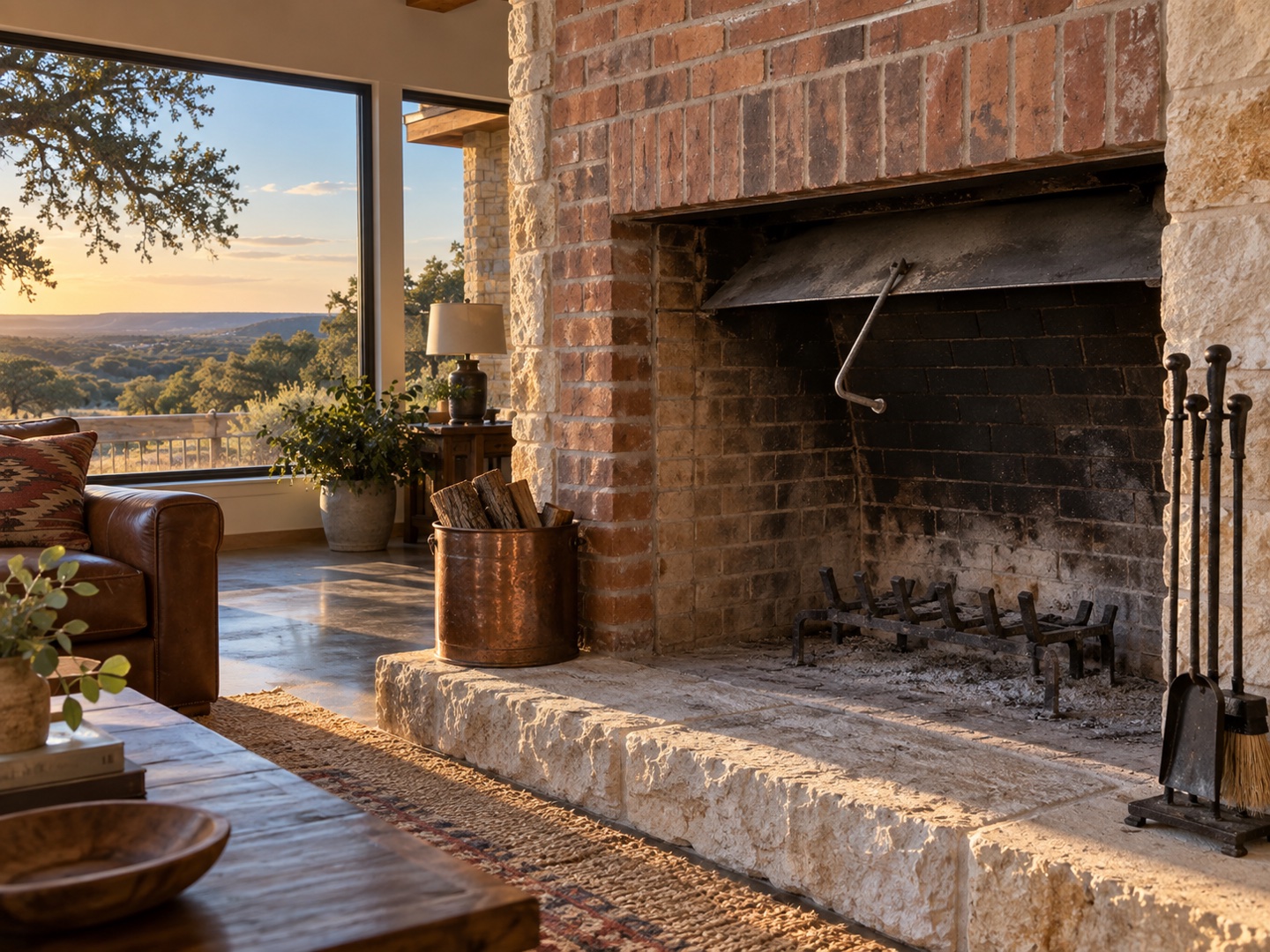
There is a small metal clamp on your damper that somebody fitted years ago, and it is both necessary and expensive.
Short answer
A vented gas log set requires the damper to be permanently fixed part-open so combustion products cannot be trapped in the room. Installers do that with a clamp. It is correct and it must stay. It also means a permanent opening in a house that runs air conditioning most of the year, and it rules out fitting a top-sealing damper while that appliance is in place.
Why it has to be open
A vented gas log set burns in the firebox and sends its combustion products up the flue. Unlike a sealed direct-vent appliance, it has no dedicated vent — it relies on the chimney.
If the damper closes while the set is burning, or while it is still hot, those products have nowhere to go but the room. That is carbon monoxide in a living space. So the damper is fixed in a position that cannot be closed, deliberately, and codes and manufacturer instructions both require it.
It is not an installer being lazy. Removing the clamp to "save energy" is one of the more dangerous things a well-meaning homeowner can do to a fireplace.
Check the clamp is still there
A previous owner, or a sweep who did not know what it was for, may have removed it. Look up into the throat with a torch. If the damper plate moves through its full travel and closes flat, and you have a vented gas set, something is wrong.
Ventless sets are different
A ventless or vent-free appliance burns into the room by design and has its own requirements and restrictions. If you are not sure which you have, the appliance plate says, and it changes the answer to everything here.
What it costs in a Texas summer
This is the part worth being honest about, because it is a real cost and the usual advice ignores it.
A fireplace throat is a substantial opening. Fixed part-open year round, it is conditioned air leaving through the roof for the eight or nine months a Texas house is being cooled, and humid outside air coming down the other way. It is not trivial.
The options are limited but they exist.
A chimney balloon or plug — with a very large caveat
An inflatable plug fitted below the damper blocks the opening. It must be removed before the appliance is used, without exception, and the risk is obvious. Most have a visible tag hanging into the firebox for exactly that reason. It is a real option for a set that is genuinely never lit, and a bad one for a set anybody might light on a whim.
Switch to a direct-vent appliance
A sealed direct-vent unit draws combustion air from outside and vents through the wall. The chimney comes out of the equation entirely, the damper can be permanently closed or the flue capped, and the appliance is considerably more efficient. Worth pricing if you are replacing the set anyway.
Glass doors help a little
They reduce airflow through the opening without sealing the flue. Not a solution, but not nothing.
What a top-sealing damper would do, and why you cannot have one
On a wood-burning or unused fireplace, a top-sealing damper is the right answer — it closes at the crown with a silicone gasket, so it genuinely seals, and it keeps the whole flue dry rather than just the firebox.
With a vented gas set fitted, it is not an option, because the flue has to stay open. That is worth knowing before someone sells you one, and it is worth knowing if you are considering going back to wood.
Need this done?
Chimney Damper Repair across Texas
Free to use, no obligation — we never charge you.
Frequently asked questions
Can I close the damper when the gas set is off?
With a vented set, no — not if it is clamped, and the clamp is there so you cannot. The risk is someone lighting it with the damper shut.
How do I know if mine is vented or direct-vent?
A direct-vent unit has sealed glass across the front and vents through an exterior wall. A vented log set sits in an open firebox and uses the chimney. The appliance plate confirms it.
Is a carbon monoxide alarm necessary?
Yes, and this is precisely the arrangement they exist for. One on every level, replaced on the schedule printed on the back.
Chimney services near you
- Houston
- San Antonio
- Dallas
- Austin
- Fort Worth
- El Paso
- Arlington
- Corpus Christi
- Plano
- Lubbock
- Irving
- Amarillo
- Garland
- Laredo
- Frisco
- McKinney
- Grand Prairie
- Killeen
- Brownsville
- Waco