Chimney guides
Cracked Refractory Panels: Why You Cannot Patch Them
Most Texas fireplaces built since 1980 are not masonry. They are manufactured appliances that look like masonry, and that changes every repair.
Short answer
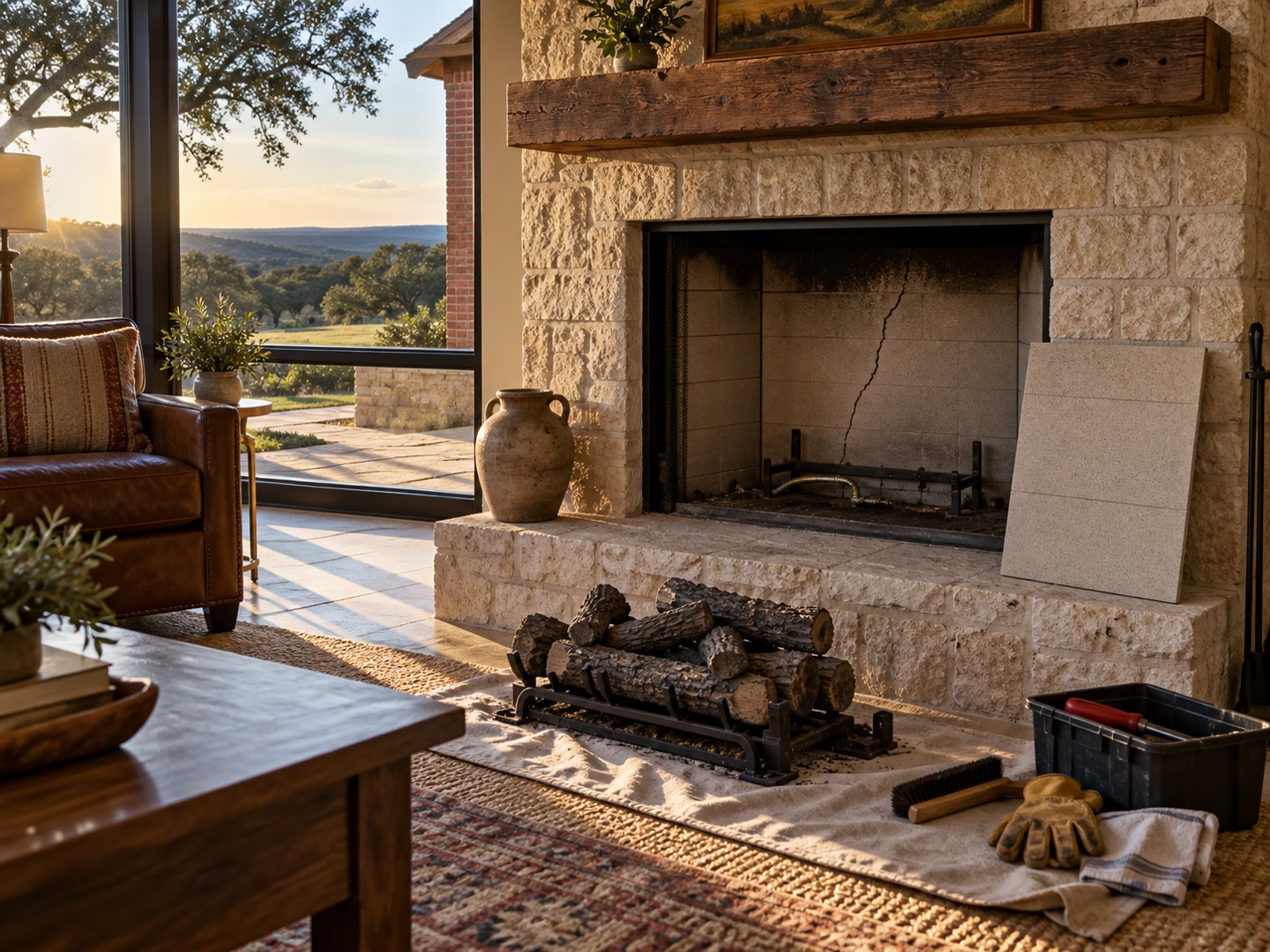
A factory-built or zero-clearance fireplace is a metal appliance with refractory panels inside, installed into a framed chase. It has a model number, a parts list and a safety listing. A cracked panel is replaced with that manufacturer part. Patching it with mortar is a fire risk and voids the listing — and it is done constantly, because the panels look like masonry to anyone who does not know.
How to tell what you have
Two minutes with a torch settles it, and everything downstream depends on the answer.
Look for a metal label
Inside the firebox, on the frame, or just inside the opening. It gives the manufacturer and model number. Masonry fireplaces have no label.
Look at the walls
Factory-built units have smooth panels, usually with a molded brick pattern. Masonry fireboxes are individual firebricks with visible mortar joints between them.
Look at the surround
A factory-built unit sits inside a framed chase, so the chimney above it is typically clad siding or stucco rather than brick, and the flue is a metal pipe rather than a tile-lined masonry flue.
Why patching is not an option
The refractory panel is not decorative. It is a rated component of a tested assembly.
These appliances are listed — tested as a complete system and certified to keep a specified amount of heat away from the combustible framing immediately behind and around them. The panels are what does that. A cracked panel lets heat and combustion gases past it toward that framing, which is why the manufacturer specifies replacement rather than repair.
Filling a crack with refractory mortar restores the appearance and not the rating. It also voids the listing, which matters to an insurer after a fire and to an inspector on a sale.
When to replace the panel and when to replace the unit
Panels are available for units still in support. On an older appliance they frequently are not, and in a coastal Texas house the metal body may be corroding as well. At that point the honest options are a new insert vented correctly, or a new unit — not a patched panel.
What cracking is acceptable
Manufacturers usually give a threshold, often expressed as a crack width you can fit a coin or a specified gauge into. Hairline crazing from heat cycling is normal. Anything you can get a fingernail into is worth asking about.
The masonry case, where it applies
Older Texas housing and the Hill Country do have genuine masonry fireboxes, and those are a different repair.
Firebrick laid in refractory mortar, repaired with the same materials. Ordinary mortar will not survive firebox temperatures and crumbles within a season, which is why a firebox repointed with the wrong material fails again quickly.
One Texas-specific thing to watch: on a masonry chimney affected by soil movement, firebox cracking sometimes reflects the same movement showing above the roof. A straight diagonal crack through the firebox is worth mentioning to whoever assesses the structure.
Need this done?
Fireplace Repair across Texas
Free to use, no obligation — we never charge you.
Frequently asked questions
Can I use the fireplace with a cracked panel?
Not once the crack is past the manufacturer threshold. That is the condition the replacement exists to remove.
Are panels expensive?
They are a manufactured part and priced like one. Considerably less than a new appliance, which is why identifying the model matters.
My unit is twenty years old and parts are unavailable. What now?
A modern insert vented through a correctly sized liner, or replacing the unit. On a coastal property the metal body is often at the end of its life anyway.
Chimney services near you
- Houston
- San Antonio
- Dallas
- Austin
- Fort Worth
- El Paso
- Arlington
- Corpus Christi
- Plano
- Lubbock
- Irving
- Amarillo
- Garland
- Laredo
- Frisco
- McKinney
- Grand Prairie
- Killeen
- Brownsville
- Waco