635 cities and towns covered
Chase Cover Replacement in Texas
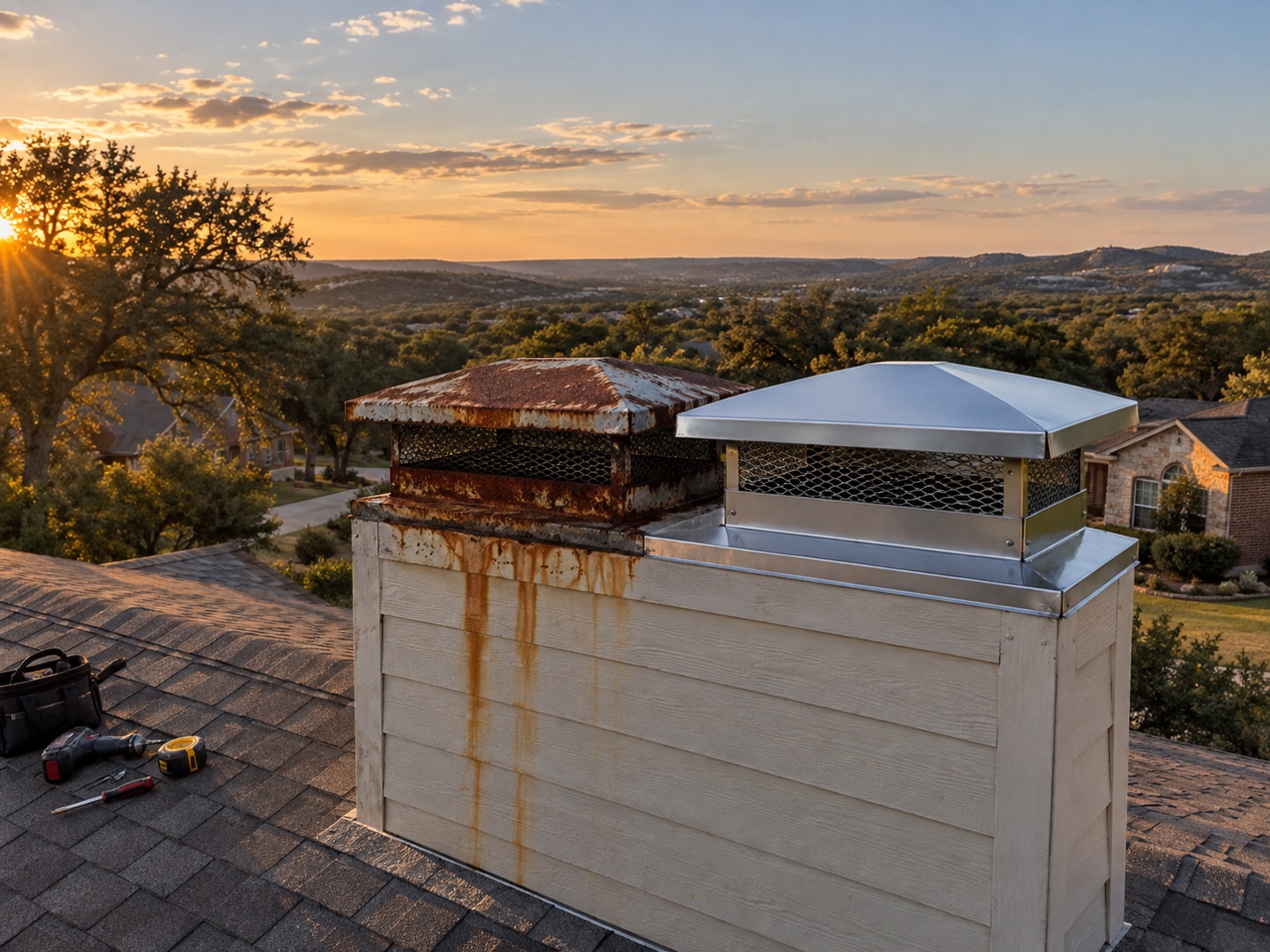
Orange streaks running down the siding below a chimney are the most common chimney complaint in Texas, and the cause is the flat metal lid on top of the chase.
Leave the building and call from outside — that is an emergency services call, not a service call. A blocked or failed flue is one of the ways carbon monoxide reaches a living space, and headaches that clear when you leave the house point the same way. If you have had a chimney fire — a roaring sound, dense smoke, or debris on the roof — do not light another fire until the flue has been inspected.
Call about a chase cover
(844) 785-4066No charge to you, and you are never committed to going ahead.
What happens when you call
- You describe the problem and where you are.
- We put you in touch with a licensed contractor covering that area.
- They arrange the visit and agree the price with you directly.
Worth having to hand
- Roughly how old the system is
- What it is doing — or not doing
- Your ZIP code
What to ask for on Chase Cover Replacement
- Stainless covers made to measure
- Cross-break so water drains
- Correct collar and storm seal
- Wind-rated fixing
- Licensed & insured Every company we put you through to holds current licensing and insurance.
- Know what to ask You are told what actually decides the price, so you can judge a quote.
- Free to use There is no charge to you. Compare quotes and walk away at any point.
- Calls answered 7 days Someone picks up seven days a week, weekends included.
How it works
Three steps, no obligation at any of them.
-
1
Call and tell us what is wrong
Describe the problem and give us your ZIP code. We match you with a chimney company covering your area — there is nothing to fill in and no charge to you — the contractor pays us, which is how it stays free at your end.
-
2
A local contractor gets in touch
A local chimney company contacts you to discuss the problem and arrange a visit. What they charge to attend or diagnose is theirs to set, so agree it with them up front.
-
3
You decide
Book the work, wait a season, or get a second quote. There is no obligation to go ahead with the contractor we introduce you to, and no charge to you either way.
What these repairs look like
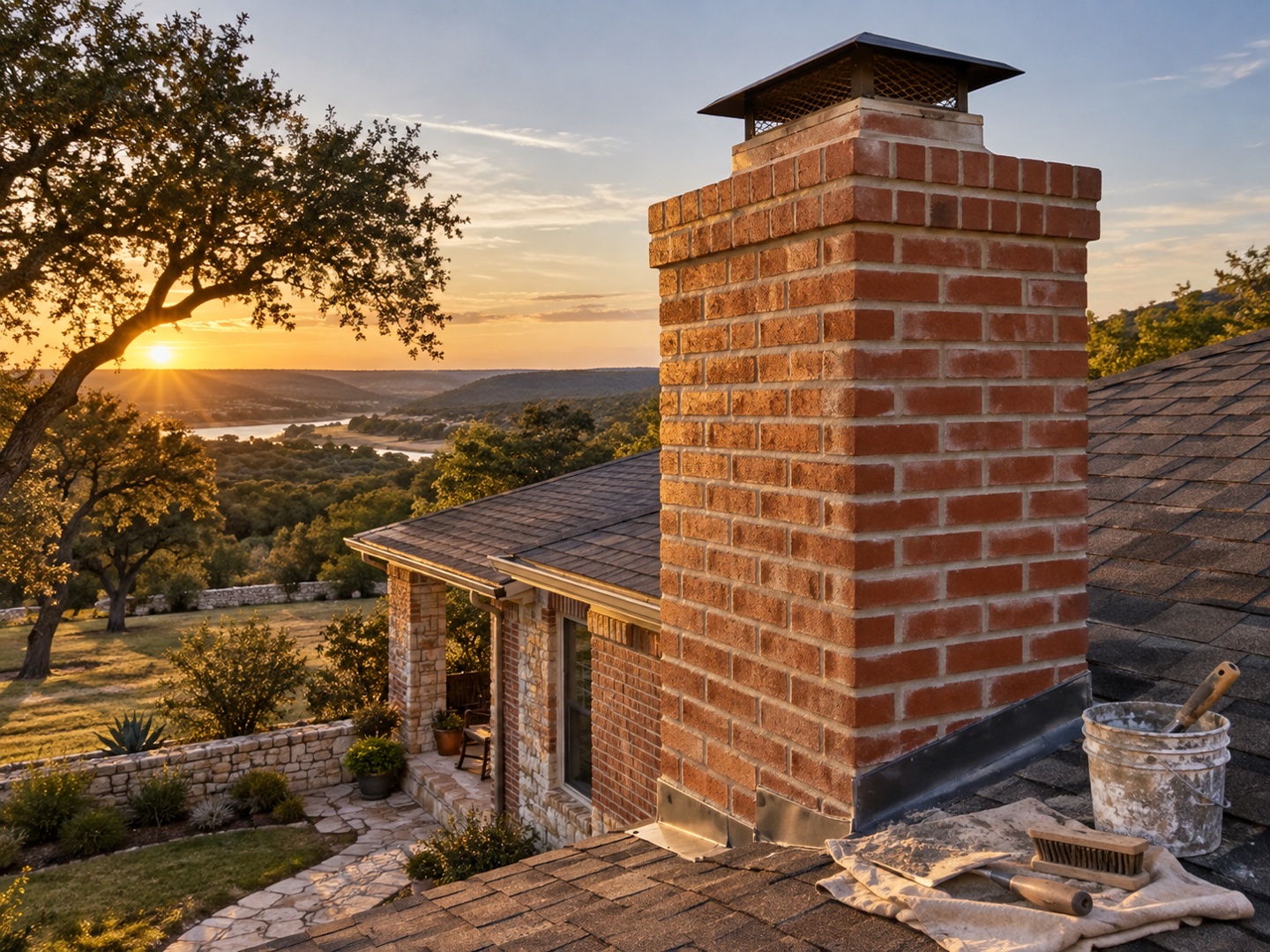
Illustrative examples of the work described here. More in our disclaimer.
Most Texas chimneys are not masonry
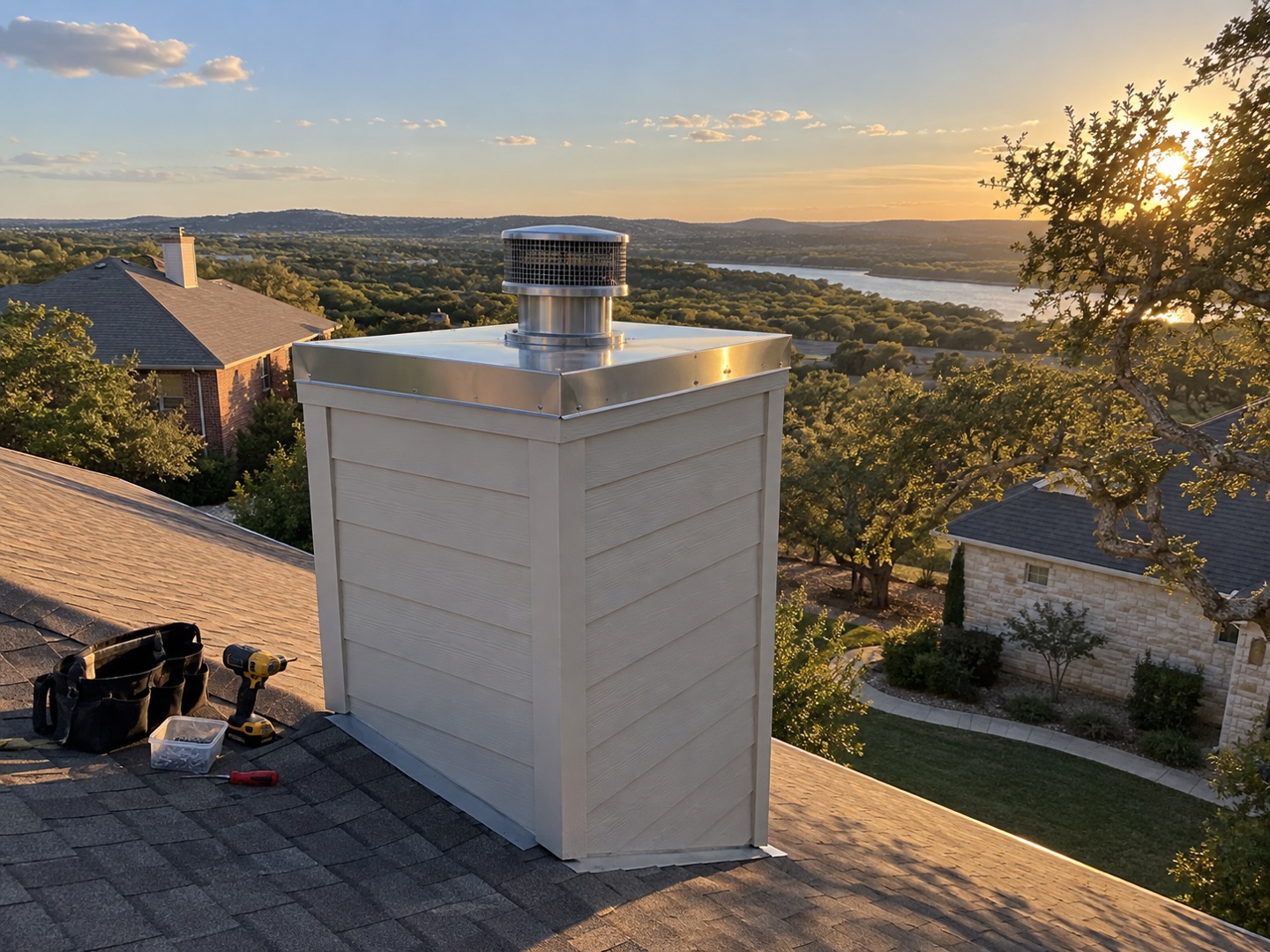
On the enormous volume of housing built across DFW, Houston and the Austin ring since about 1980, the chimney is a framed chase clad to match the house with a sheet-metal lid on top and a factory-built firebox inside. It is not a masonry stack and it does not behave like one.
Builders fit a flat galvanized cover because it is the cheapest part available. Flat means water stands in the middle instead of running off, and standing water corrodes galvanized steel from the top down. Once it perforates, water runs into the chase — onto framing, onto insulation — while the only visible sign is rust staining down the outside.
Stainless with a cross-break
A shallow ridge pressed into the sheet forces water to the edges, and stainless does not rust through. Together that removes both failure modes, and it is the last cover the chimney needs.
The collar is where many still leak
The cover has to seal where the flue pipe passes through it. A proper collar with a storm seal does that; a bead of silicone does not, and it is where a lot of otherwise decent covers fail.
Wind and what is underneath
Texas storms put direct uplift on anything standing proud of a roof. A cover that is merely resting becomes a cover that is gone, and an open chase takes rain for months before anyone notices.
Check the chase interior first
Water in a framed chase wets framing and insulation with nowhere to dry. Putting a new lid over rotted framing solves half the problem.
On the Gulf coast
Salt plus permanent humidity takes galvanized apart far faster than inland. From Galveston through Beaumont, stainless is the only specification worth fitting.
Chase Cover Replacement — frequently asked questions
Is the rust from the chimney or the roof?
On a clad chase, almost always the cover. Masonry stains white with efflorescence, not orange.
Can a cover be patched?
Temporarily. Once perforated it is thin everywhere and a patch just moves the next hole.
Are covers made to measure?
Yes — chases vary in size and flue count, so covers are fabricated from measurements taken on the roof.
Does the cap go on the cover?
Separate parts. The cover closes the chase; the cap sits over the flue opening with mesh. Both are usually done in one visit.
How long should stainless last?
Decades, including on the Gulf coast.
Chase Cover Replacement near you
We cover cities and towns across Texas.