635 cities and towns covered
Coastal Chimney Protection in Texas
Salt plus permanent humidity is harder on metal than either alone, and tropical wind puts direct uplift on everything standing above the roof.
Leave the building and call from outside — that is an emergency services call, not a service call. A blocked or failed flue is one of the ways carbon monoxide reaches a living space, and headaches that clear when you leave the house point the same way. If you have had a chimney fire — a roaring sound, dense smoke, or debris on the roof — do not light another fire until the flue has been inspected.
Call about coastal protection
(844) 785-4066No charge to you, and you are never committed to going ahead.
What happens when you call
- You describe the problem and where you are.
- We put you in touch with a licensed contractor covering that area.
- They arrange the visit and agree the price with you directly.
Worth having to hand
- Roughly how old the system is
- What it is doing — or not doing
- Your ZIP code
What to ask for on Coastal Chimney Protection
- Stainless caps, covers and fixings
- Wind-rated fixing for tropical storms
- Humidity-appropriate masonry treatment
- Post-storm inspection
- Licensed & insured Every company we put you through to holds current licensing and insurance.
- Know what to ask You are told what actually decides the price, so you can judge a quote.
- Free to use There is no charge to you. Compare quotes and walk away at any point.
- Calls answered 7 days Someone picks up seven days a week, weekends included.
How it works
Three steps, no obligation at any of them.
-
1
Call and tell us what is wrong
Describe the problem and give us your ZIP code. We match you with a chimney company covering your area — there is nothing to fill in and no charge to you — the contractor pays us, which is how it stays free at your end.
-
2
A local contractor gets in touch
A local chimney company contacts you to discuss the problem and arrange a visit. What they charge to attend or diagnose is theirs to set, so agree it with them up front.
-
3
You decide
Book the work, wait a season, or get a second quote. There is no obligation to go ahead with the contractor we introduce you to, and no charge to you either way.
What these repairs look like
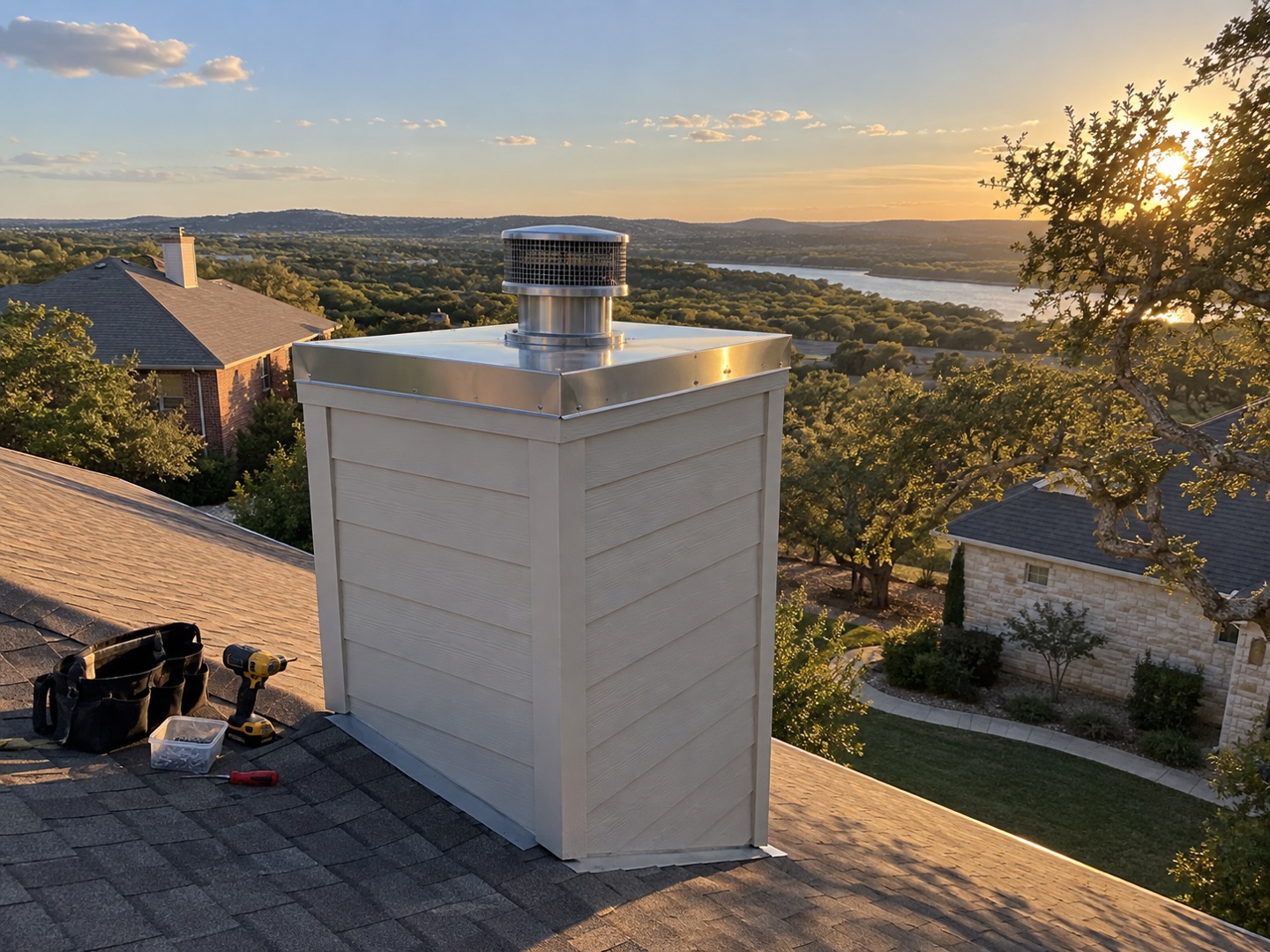
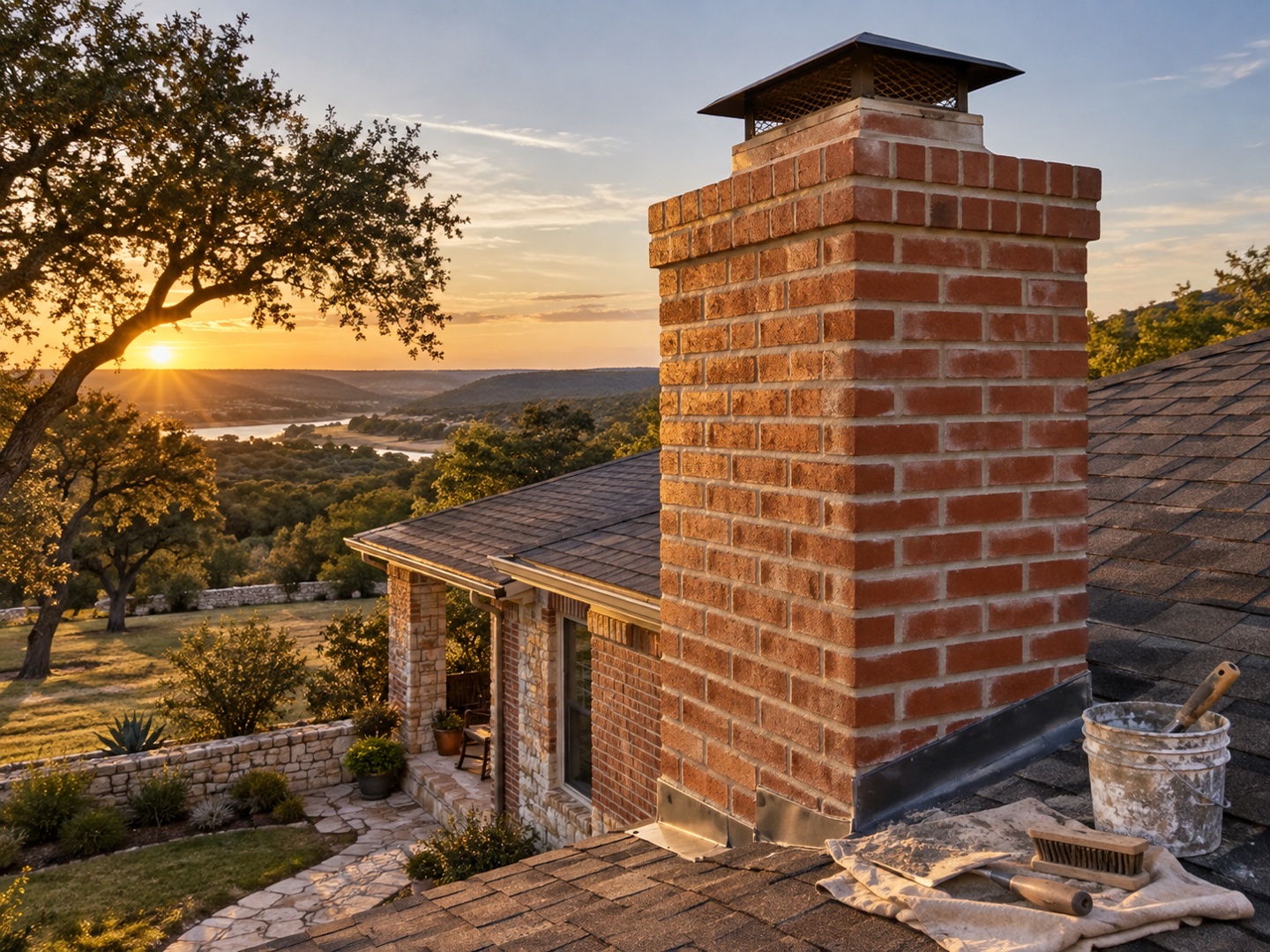
Illustrative examples of the work described here. More in our disclaimer.
Humidity is the multiplier
Airborne salt holds moisture against whatever it lands on, and on the Gulf coast the air is already carrying plenty. A chimney from Galveston through Beaumont is damp far more of the year than the rainfall alone would suggest, so corrosion runs continuously rather than in bursts.
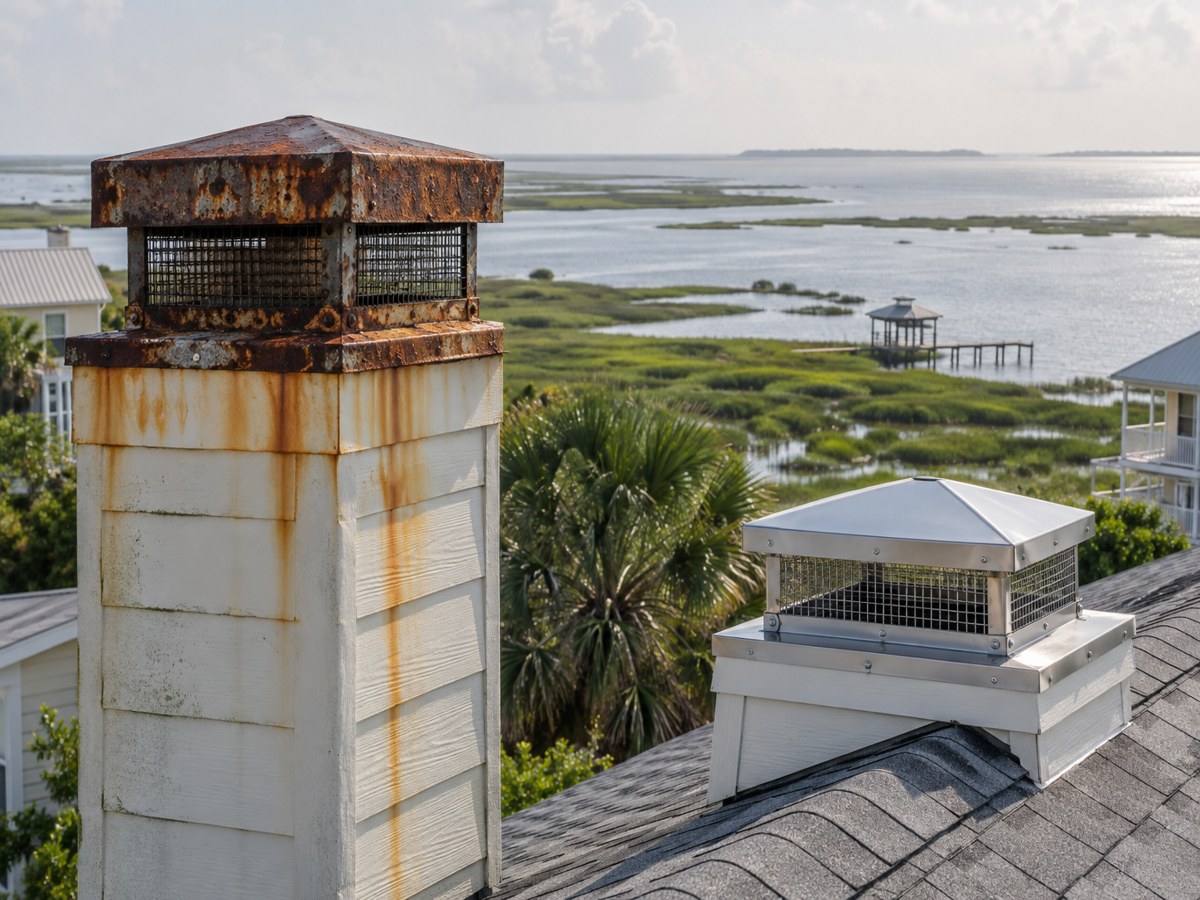
Galvanized caps, covers, flashing and mesh all go quickly. The visible result is rust streaking down the wall, which people read as the chimney failing — it is usually the metal on top failing and the wall is what the runoff lands on.
Stainless throughout
Caps, arrestor mesh, chase covers and fixings. A stainless cover held with plated screws still fails at the screws.
Masonry stays damp
A breathable repellent on sound masonry helps; a film-forming sealant traps moisture that has nowhere to go and is actively harmful here.
Wind and what it does
Tropical storm wind puts uplift on anything proud of the roof. A cap that is merely resting becomes a cap that is gone, and an open flue then takes rain for months before anyone notices.
Fixing method matters more than material
Ask how the cap and cover will be secured, not only what they are made of. Clamped or anchored, not friction-fitted.
Check after every named storm
A quick look at the cap, the cover and the flashing after a storm is inexpensive, and it catches the open flue before a season of rain has gone down it.
Coastal Chimney Protection — frequently asked questions
How far inland does salt reach?
Further than most expect, and storms carry it further. Anywhere in the coastal counties, specify stainless.
Is stainless worth the extra?
On the Gulf coast it is not really a choice — galvanized may last a handful of years against decades for stainless.
Should I waterproof a coastal chimney?
On sound masonry yes, with a breathable product. On spalling or cracked masonry it makes things worse.
What should we check after a hurricane?
Cap and chase cover still present and secure, flashing intact, and no debris in the flue. An open flue after a storm is the most common finding.
The chimney is streaked with rust.
Usually staining from corroding metal on top, and it cleans. Whether the masonry underneath has suffered needs a look.
Coastal Chimney Protection near you
We cover cities and towns across Texas.