635 cities and towns covered
Chimney Sweeping in Texas
Where you are in Texas decides whether this is a sweep or an inspection. East Texas burns real wood. Most of the metros have a gas set that has never been looked at.
Leave the building and call from outside — that is an emergency services call, not a service call. A blocked or failed flue is one of the ways carbon monoxide reaches a living space, and headaches that clear when you leave the house point the same way. If you have had a chimney fire — a roaring sound, dense smoke, or debris on the roof — do not light another fire until the flue has been inspected.
Call about chimney sweeping
(844) 785-4066No charge to you, and you are never committed to going ahead.
What happens when you call
- You describe the problem and where you are.
- We put you in touch with a licensed contractor covering that area.
- They arrange the visit and agree the price with you directly.
Worth having to hand
- Roughly how old the system is
- What it is doing — or not doing
- Your ZIP code
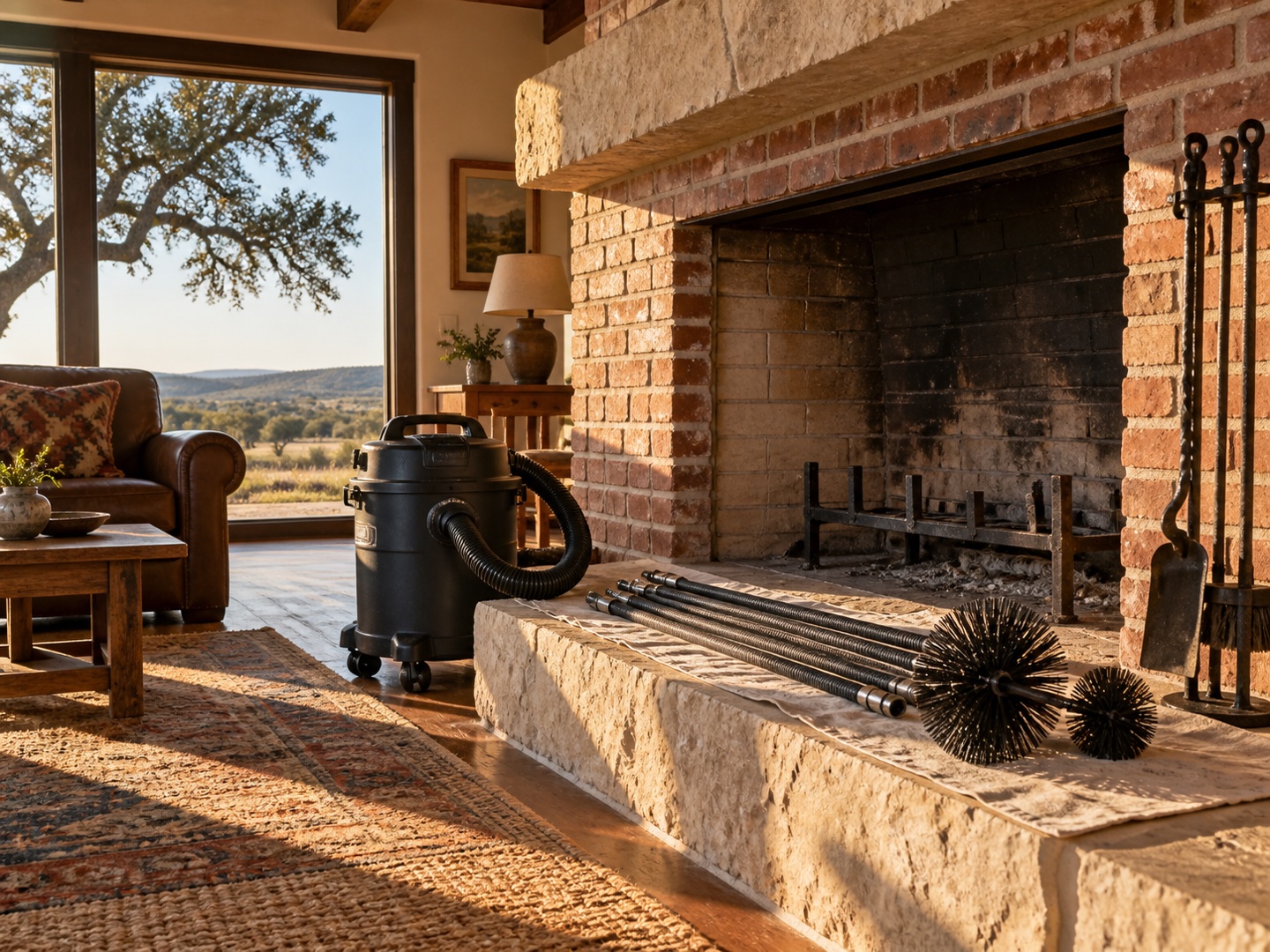
What to ask for on Chimney Sweeping
- Wood, pellet and gas appliances
- Sealed vacuum, no mess indoors
- Annual inspection included
- Factory-built system checks
- Licensed & insured Every company we put you through to holds current licensing and insurance.
- Know what to ask You are told what actually decides the price, so you can judge a quote.
- Free to use There is no charge to you. Compare quotes and walk away at any point.
- Calls answered 7 days Someone picks up seven days a week, weekends included.
How it works
Three steps, no obligation at any of them.
-
1
Call and tell us what is wrong
Describe the problem and give us your ZIP code. We match you with a chimney company covering your area — there is nothing to fill in and no charge to you — the contractor pays us, which is how it stays free at your end.
-
2
A local contractor gets in touch
A local chimney company contacts you to discuss the problem and arrange a visit. What they charge to attend or diagnose is theirs to set, so agree it with them up front.
-
3
You decide
Book the work, wait a season, or get a second quote. There is no obligation to go ahead with the contractor we introduce you to, and no charge to you either way.
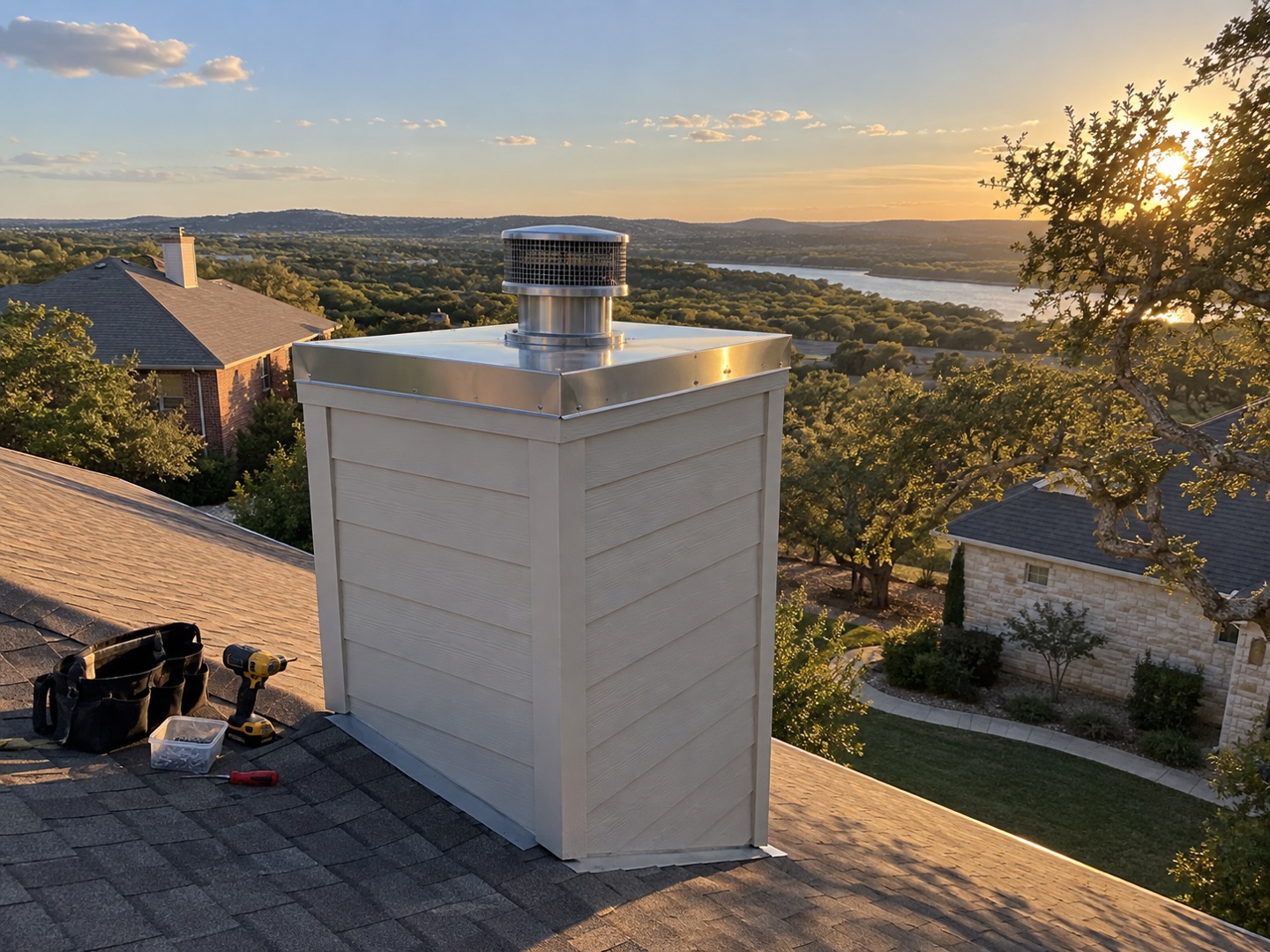
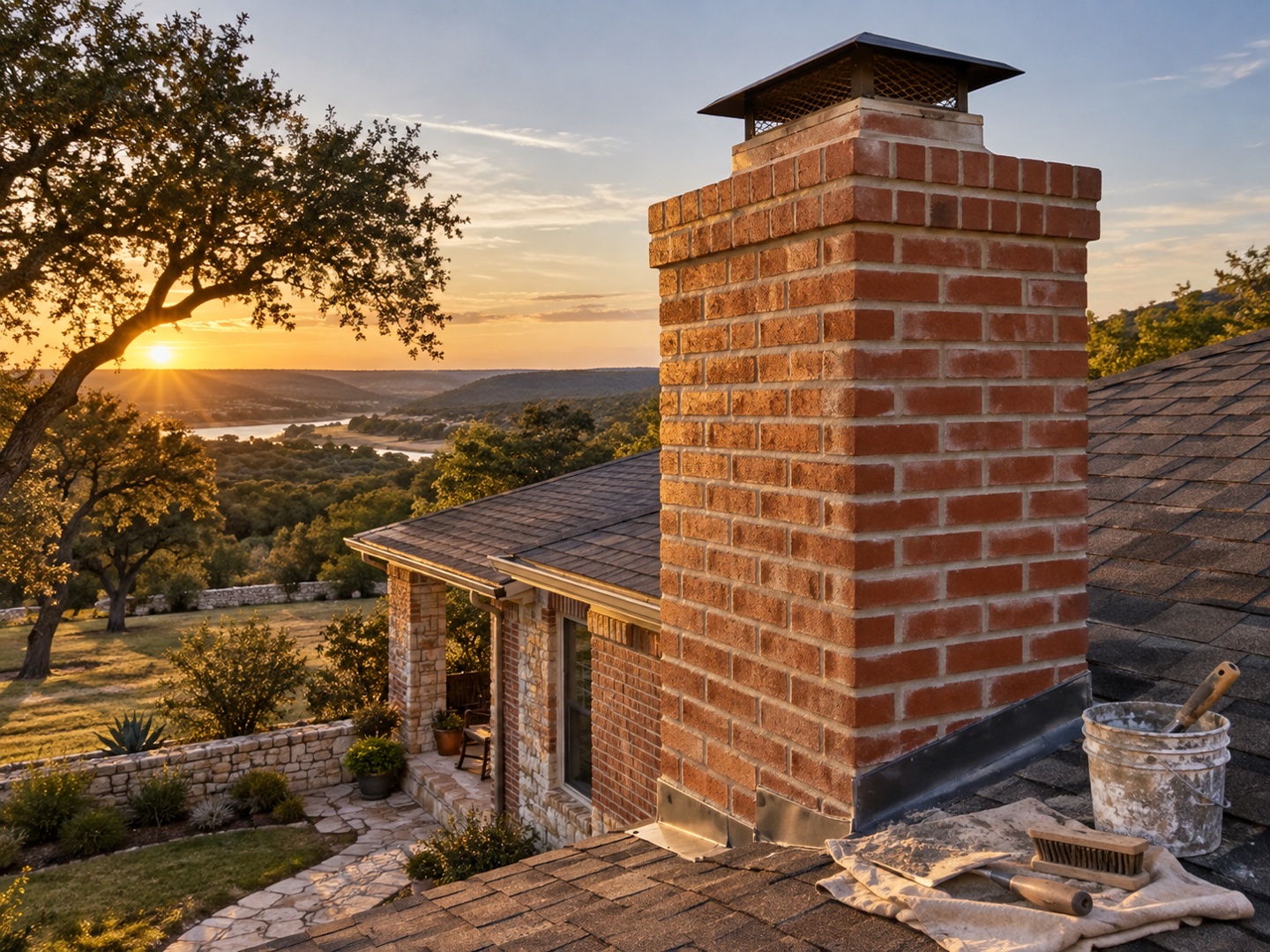
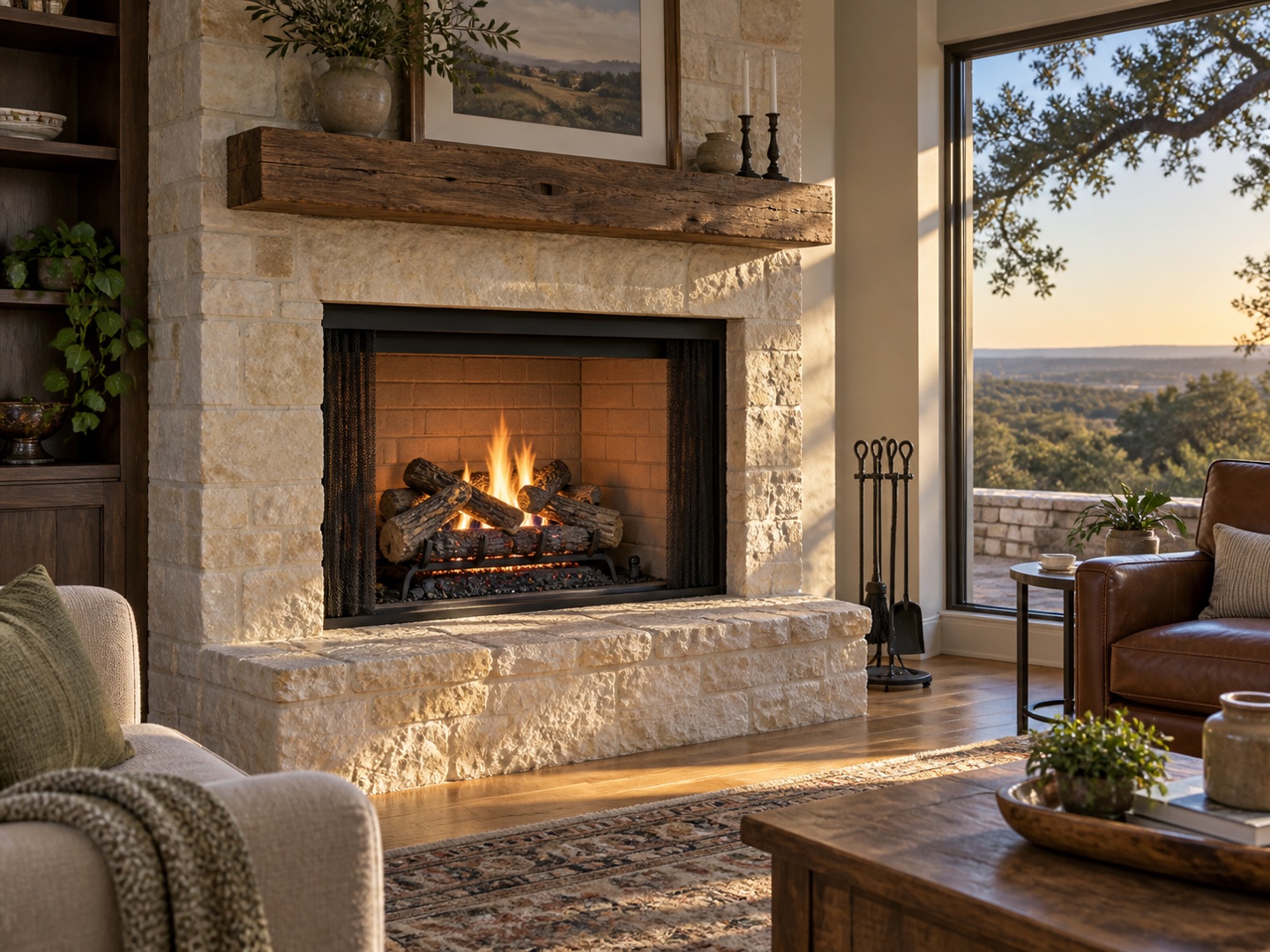
What these repairs look like
Illustrative examples of the work described here. More in our disclaimer.
Where Texas actually burns wood
Through the Piney Woods of East Texas there is timber everywhere and plenty of households genuinely burn it, so creosote is a real annual finding. The Hill Country is similar at altitude, and the Panhandle sees enough winter to make a fire worth lighting.
Across DFW, Houston, San Antonio and the Valley, the fireplace is usually a gas log set in a factory-built firebox. The brush matters far less there than the inspection and the gas service that come with the visit.
Creosote stages
Light flaky soot brushes away. Harder granular deposit needs a rotary tool. Glazed creosote is a shiny tar coating that will not brush off and is the stage at which a chimney fire becomes a real prospect.
Humidity on the Gulf
Along the coast a flue is damp most of the year, which keeps deposits wet and accelerates corrosion of anything metal in the system. It also produces the musty smell people notice in summer.
What a proper visit looks like
A sealed vacuum at the firebox before anything is disturbed, drop cloths down, nothing left for you to clean up.
On factory-built systems
A sweep should also be checking the refractory panels, the chase cover from the roof, and the cap — those are where the faults are on Texas housing, rather than in the flue itself.
What should be left behind
A written note of what was done and found, with photographs of anything recommended.
Chimney Sweeping — frequently asked questions
How often should a chimney be swept?
Annually at minimum for regular wood use. The inspection is annual regardless of what the appliance is.
We only have gas logs.
You need the annual service and inspection more than the brush. Nesting, debris and a corroded chase cover are all found that way.
Will it make a mess?
It should not. A sealed vacuum and drop cloths handle it.
Best time to book?
Late spring through early fall. Availability is better and you are not calling on the first cold night alongside everyone else.
There is a smell in summer.
Damp deposits plus humid air being drawn down the flue rather than up. Sweeping removes the source; a top-sealing damper addresses the airflow — unless a vented gas set requires the damper clamped open.
Chimney Sweeping near you
We cover cities and towns across Texas.