635 cities and towns covered
Chimney Inspection in Texas
The Texas-specific finding is movement. A chimney pulling away from the wall is the ground doing it, and a repair that ignores that is a repair you pay for twice.
Leave the building and call from outside — that is an emergency services call, not a service call. A blocked or failed flue is one of the ways carbon monoxide reaches a living space, and headaches that clear when you leave the house point the same way. If you have had a chimney fire — a roaring sound, dense smoke, or debris on the roof — do not light another fire until the flue has been inspected.
Call about a chimney inspection
(844) 785-4066No charge to you, and you are never committed to going ahead.
What happens when you call
- You describe the problem and where you are.
- We put you in touch with a licensed contractor covering that area.
- They arrange the visit and agree the price with you directly.
Worth having to hand
- Roughly how old the system is
- What it is doing — or not doing
- Your ZIP code
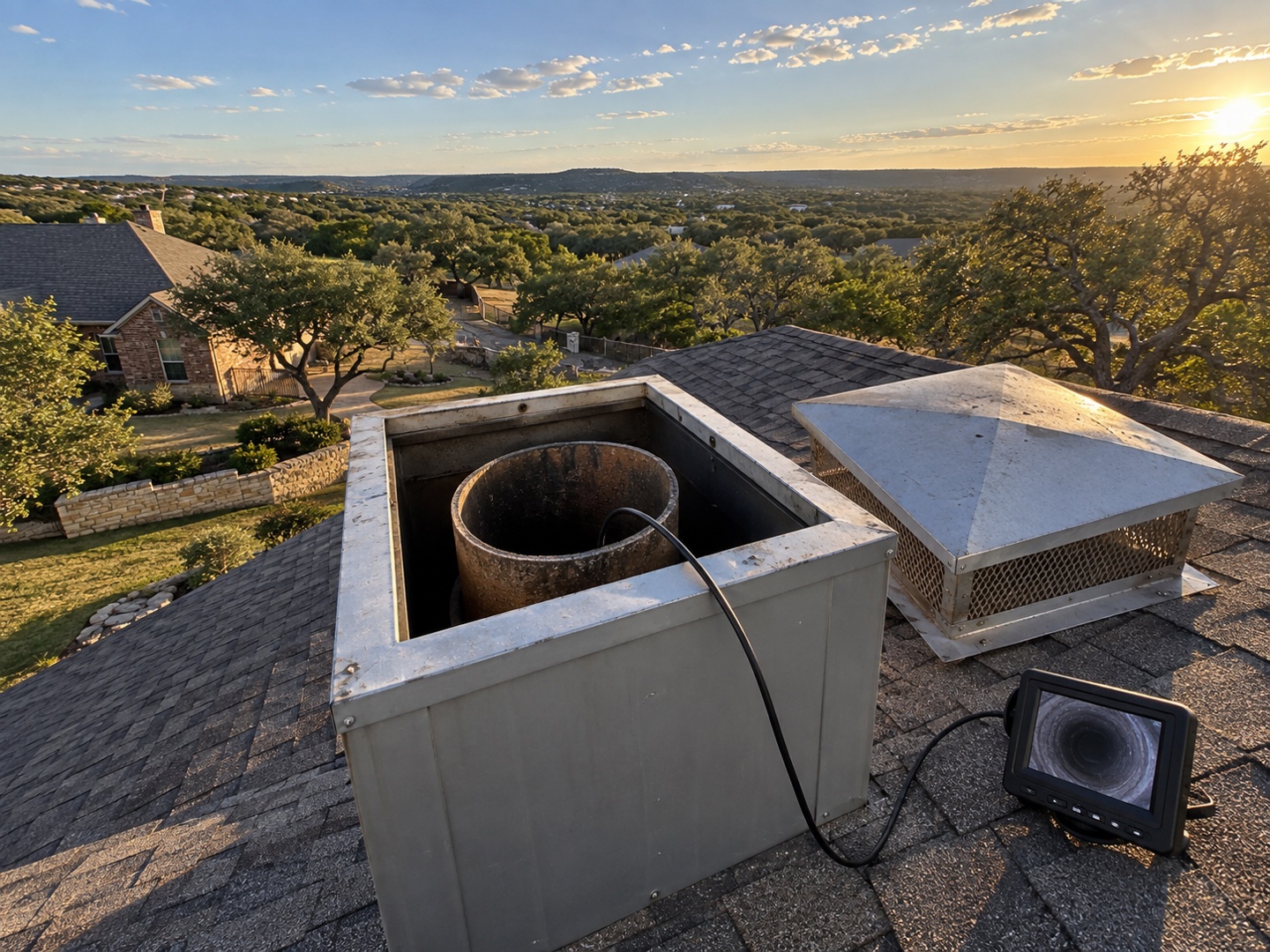
What to ask for on Chimney Inspection
- Level 1, 2 and 3 to the NFPA 211 standard
- Camera survey of the full flue
- Soil movement versus weather diagnosis
- Factory-built firebox assessment
- Licensed & insured Every company we put you through to holds current licensing and insurance.
- Know what to ask You are told what actually decides the price, so you can judge a quote.
- Free to use There is no charge to you. Compare quotes and walk away at any point.
- Calls answered 7 days Someone picks up seven days a week, weekends included.
How it works
Three steps, no obligation at any of them.
-
1
Call and tell us what is wrong
Describe the problem and give us your ZIP code. We match you with a chimney company covering your area — there is nothing to fill in and no charge to you — the contractor pays us, which is how it stays free at your end.
-
2
A local contractor gets in touch
A local chimney company contacts you to discuss the problem and arrange a visit. What they charge to attend or diagnose is theirs to set, so agree it with them up front.
-
3
You decide
Book the work, wait a season, or get a second quote. There is no obligation to go ahead with the contractor we introduce you to, and no charge to you either way.
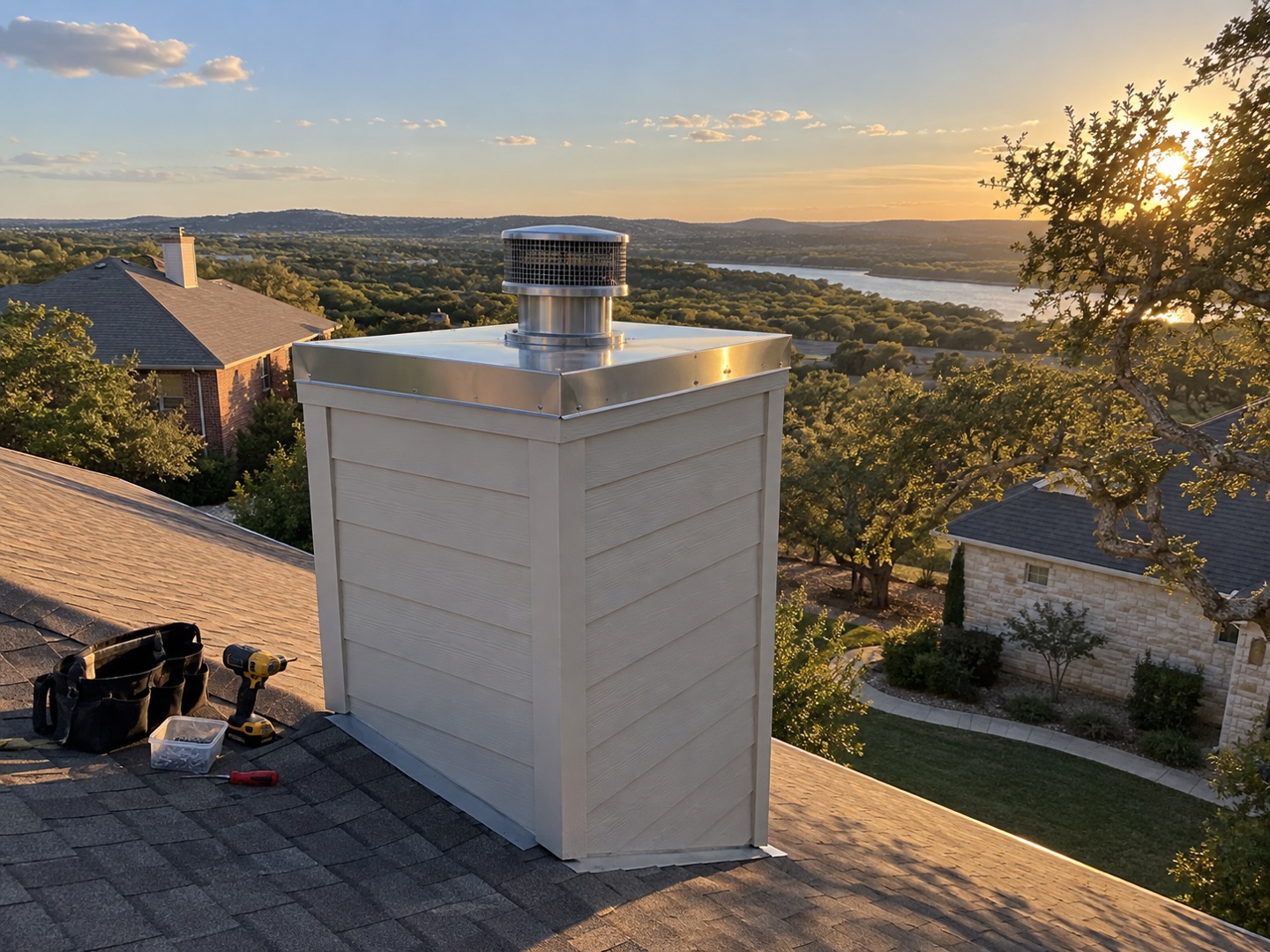
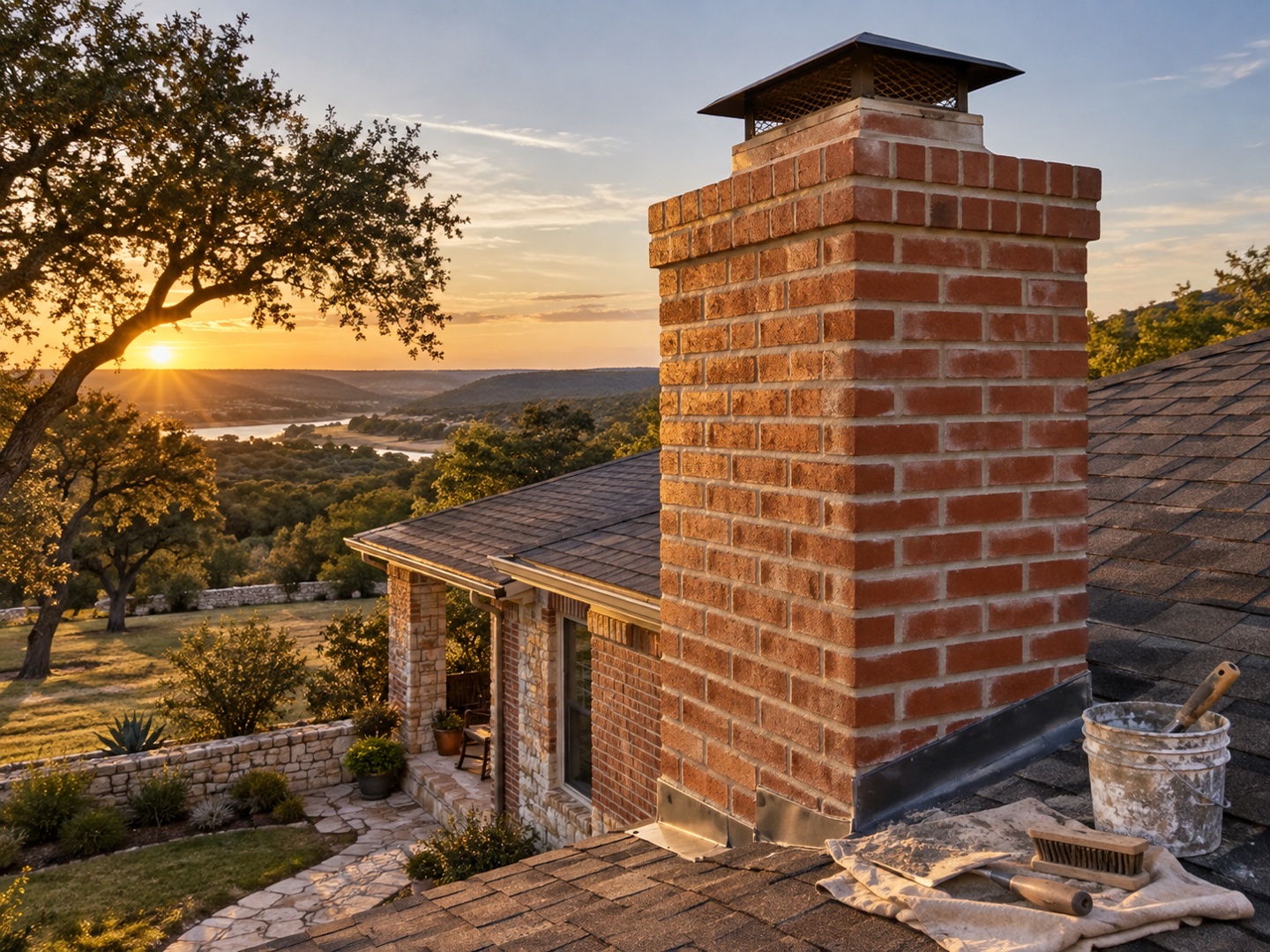
What these repairs look like
Illustrative examples of the work described here. More in our disclaimer.
Which level applies
NFPA 211 defines three levels nationally. Level 1 is a visual check of readily accessible parts. Level 2 adds a camera survey of the whole flue plus accessible attic and crawl space, and is required on a property transfer, on any change of fuel or appliance, and after a chimney fire.
What a Texas inspection should establish
Whether the chimney is masonry or a framed chase, whether the firebox is factory-built or masonry, and whether any cracking is soil movement or weather. Those three answers change everything that follows.
Movement versus weather
Weather damage is surface scaling spread across exposed faces. Movement is a single stepped diagonal crack tracking the mortar joints, or a clean gap where the chimney meets the wall. In the Metroplex it is almost always movement.
Two very different housing stocks
Older masonry chimneys in the metros and East Texas behave like chimneys anywhere. Post-1980 housing across DFW, Houston and the Austin growth ring is dominated by framed chases with sheet-metal covers and factory- built fireboxes, which are manufactured appliances with a service life and a parts list.
An inspector who treats a factory-built unit as masonry will miss what matters, and the reverse is equally true.
Factory-built has a model number
There is a metal label inside the firebox or on the frame. It determines which refractory panels fit and whether parts are still available at all.
What a good report contains
Written, with camera stills and exterior photographs, separating safety defects from wear. It should state plainly whether cracking is structural.
Chimney Inspection — frequently asked questions
How often should a chimney be inspected?
Annually, whatever it vents. That covers gas log sets, which are the most commonly skipped appliance in Texas.
Does a home inspector cover this?
Not to this standard — no camera survey of the flue, and rarely any comment on soil movement.
The fireplace is gas only. Still needed?
Yes. Gas sets have their own annual service needs, and the flue and chase above them still collect nesting and still corrode.
There is a gap between the chimney and the house.
That is movement, almost certainly soil. Worth an inspection that looks at the foundation question and not only at the masonry.
What does it cost?
It depends on the level and the chimney, and the contractor you are introduced to sets their own price.
Chimney Inspection near you
We cover cities and towns across Texas.